Three different trucks in the F-150 lineup all promise dirt-road confidence, but they are not interchangeable. If you are cross-shopping Raptor, Tremor, and FX4 for Ontario driving, from cottage-road weekends to gravel-lane commutes, the right pick depends on how hard you actually plan to push it off pavement.
This is not a walk through every F-150 trim or engine. It is a focused look at the three off-road-oriented setups, what hardware each one actually brings, and what to confirm with the dealer before you place an order.
Why These Three Deserve a Closer Look
Raptor, Tremor, and FX4 all address off-pavement driving, but they solve different problems. Raptor is built for sustained high-speed desert-style running. Tremor is tuned for steady grip across mixed terrain at moderate speed. FX4 is a hardware package layered onto familiar XLT, Lariat, King Ranch, or Platinum trims for occasional dirt-road and trail use.
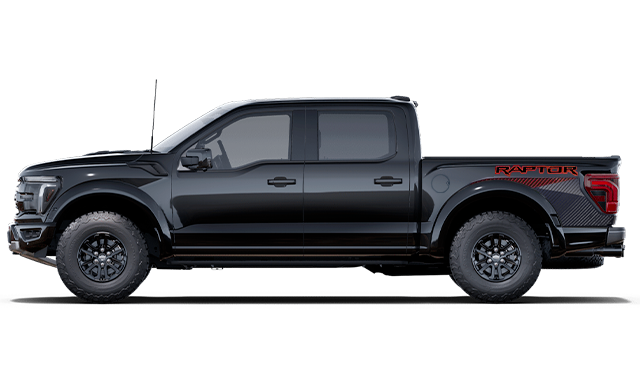
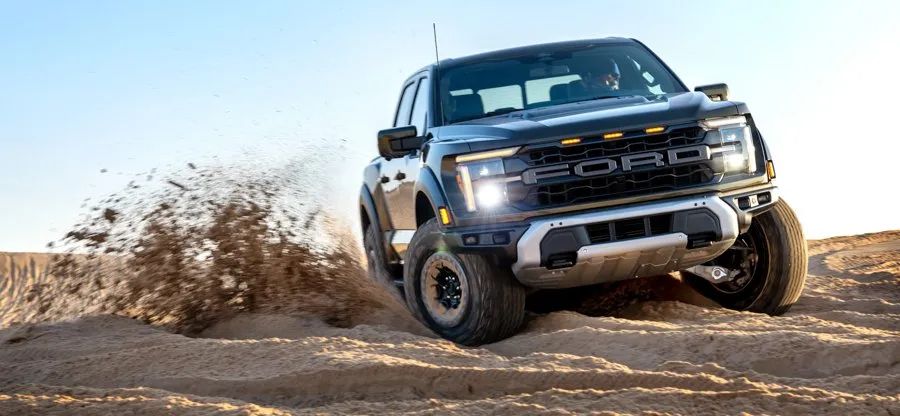
The High-Output 3.5L EcoBoost V6 under the Raptor’s hood makes 450 hp and 510 lb-ft, paired with FOX Racing Dual-Valve shocks and a modular front bumper. Raptor R steps up to a supercharged 5.2L V8 rated at 720 hp and 640 lb-ft for buyers who want that ceiling.
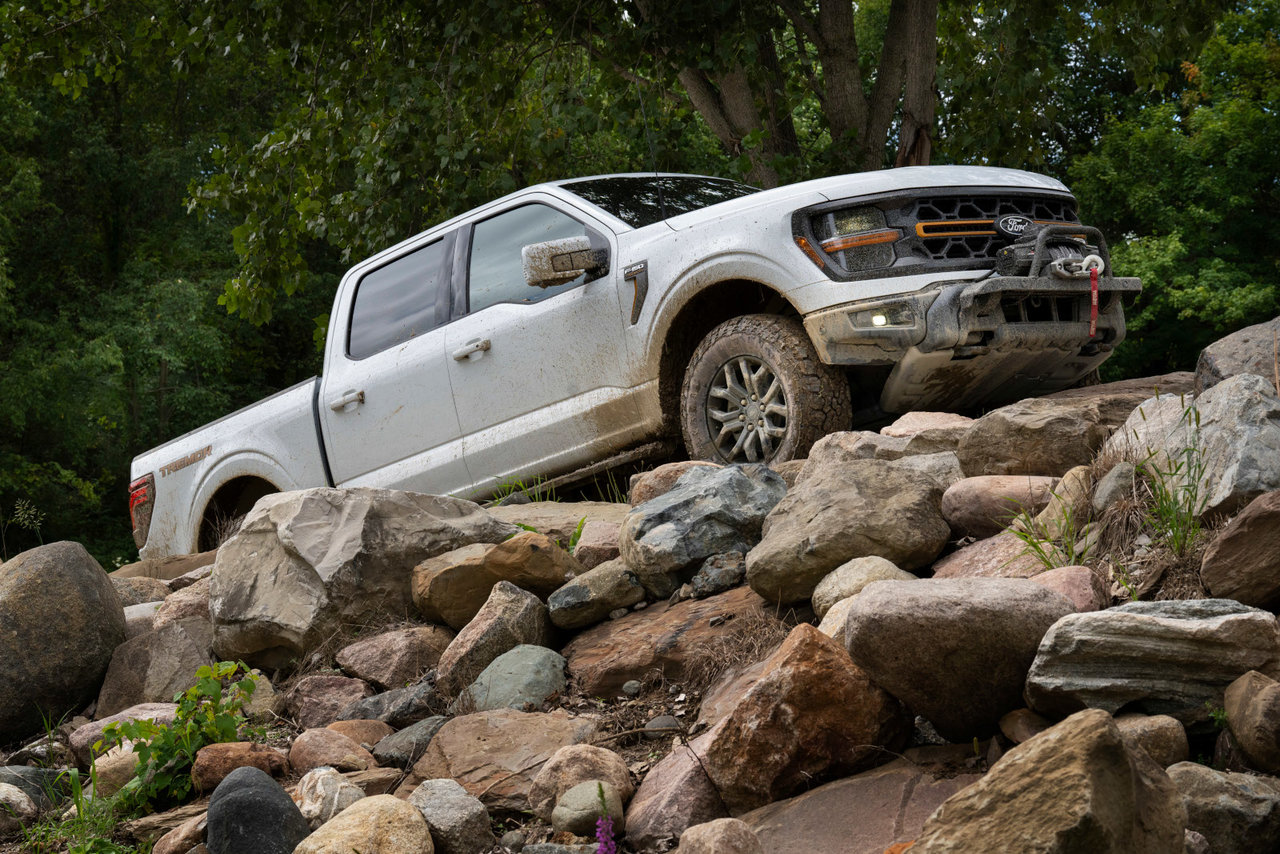
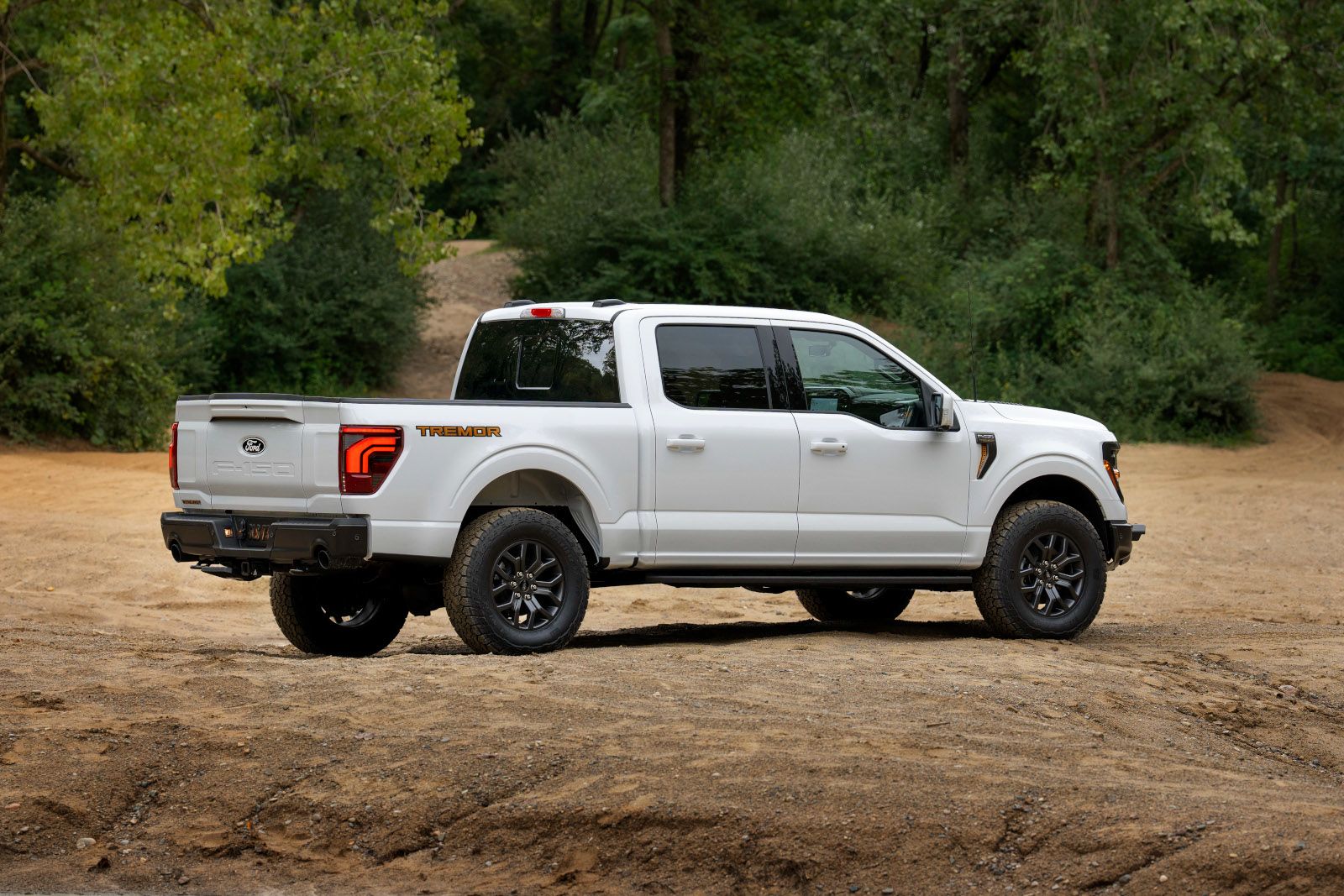
Tremor runs the standard 3.5L EcoBoost V6 (400 hp, 500 lb-ft) with an off-road-tuned suspension, steel skid plates, and large all-terrain tires. FX4 is an available off-road package on XLT, Lariat, King Ranch, or Platinum trims, so its off-road ceiling depends on the underlying truck.
Off-Road Hardware Worth Confirming
Before ordering, verify the equipment list line by line rather than assuming a name implies a spec sheet. Ground clearance, suspension tuning, tire size, skid protection, and available drive modes vary meaningfully between these three.
- Ground clearance: Raptor runs 306 mm on the SuperCrew 5.5’ box; Tremor runs 240 mm on the same configuration. A standard 4x4 SuperCrew sits around 238.8 mm to 246.4 mm depending on box length, which is the baseline FX4 builds on.
- Approach angle: Raptor reaches 31.0 degrees; Tremor sits at 27.6 degrees; a standard 4x4 SuperCrew runs 24.3 to 24.8 degrees, the figure relevant to an FX4-equipped truck.
- Drive modes: up to eight modes are available across the lineup, including Baja mode, which is exclusive to Raptor.
- Skid protection and tires: Tremor includes steel skid plates and large all-terrain tires as part of the package; Raptor adds its own suspension and bumper hardware on top.
A package name on a build sheet does not guarantee a specific ground clearance or approach angle. Two trucks both called “off-road” can differ by tens of millimetres and several degrees depending on cab, box, and drivetrain.
Who Each One Fits
Raptor fits the buyer whose weekends genuinely include high-speed off-road running, whether that means open trail networks or long gravel stretches taken at pace. Its fuel economy runs higher than the rest of the lineup, city figures land near 16.6 L/100km and combined near 15.8 L/100km, a real tradeoff for that capability.
Tremor fits the buyer who wants a meaningful step up in ground clearance and terrain grip without the extremes of Raptor. Its combined fuel economy of 13.3 L/100km sits closer to a standard 4x4 EcoBoost truck, and it keeps a more conventional ride for daily use.
FX4 fits the buyer whose off-road use is occasional: a cottage road, a work site, a gravel driveway in a wet season. Because it layers onto an existing trim, it lets you keep the cab, box, and powertrain that fit your daily routine while adding protection for the days you leave the pavement.
What to Check Before You Order
Cab and box choice affects daily usability as much as any off-road spec. A SuperCrew with the 5.5-foot box offers 1,494.8 L of cargo volume behind the rear seats and legroom of 1,115 mm; stepping to a 6.5-foot box raises cargo volume to 1,764.6 L. More box length means more hauling room but a longer overall truck to manoeuvre and park.
Towing and payload swing with engine choice, not just the off-road package. The 3.5L PowerBoost hybrid tows up to 11,600 lbs (5,261 kg) with 1,740 lbs (789 kg) of payload, the standard 3.5L EcoBoost reaches 13,500 lbs (6,123 kg) with 2,440 lbs (1,107 kg) of payload, and Raptor’s High-Output 3.5L EcoBoost tops out at 8,200 lbs (3,719 kg) towing with 1,400 lbs (635 kg) of payload.
If weekend towing matters as much as trail time, that spread should factor into the decision as much as ground clearance does.
|
Setup
|
Engine
|
Ground Clearance
|
Approach Angle
|
Max Towing
|
|
Raptor
|
High-Output 3.5L EcoBoost V6, 450 hp / 510 lb-ft
|
306 mm
|
31.0°
|
8,200 lbs (3,719 kg)
|
|
Tremor
|
3.5L EcoBoost V6, 400 hp / 500 lb-ft
|
240 mm
|
27.6°
|
10,600 lbs (4,808 kg)
|
|
FX4 (on 4x4 SuperCrew)
|
Depends on chosen trim/engine
|
238.8-246.4 mm
|
24.3-24.8°
|
Varies by engine
|
Every F-150 carries the same 3-year/60,000 km basic warranty and 5-year/100,000 km powertrain coverage, regardless of which off-road setup you choose, so warranty terms are not a factor in this particular decision.
Confirming Your Build with the Dealer
Raptor, Tremor, and FX4 solve different problems: sustained high-speed capability, balanced all-terrain grip, or occasional dirt-road protection layered onto a daily truck. None of them is the wrong answer; the wrong answer is ordering one without confirming it fits how you actually drive.
Ask which cab and box combinations are available with each off-road setup, which engines pair with Tremor versus FX4-eligible trims, and how towing and payload change once the off-road hardware is added. Build constraints and equipment lists can shift trim to trim, so confirming specifics before you order saves a rebuild later.
Visit Reliable Ford in Fergus to compare the Raptor, Tremor, and FX4 setups in the lineup and work through cab, box, and powertrain options with the sales team before you finalize your build.