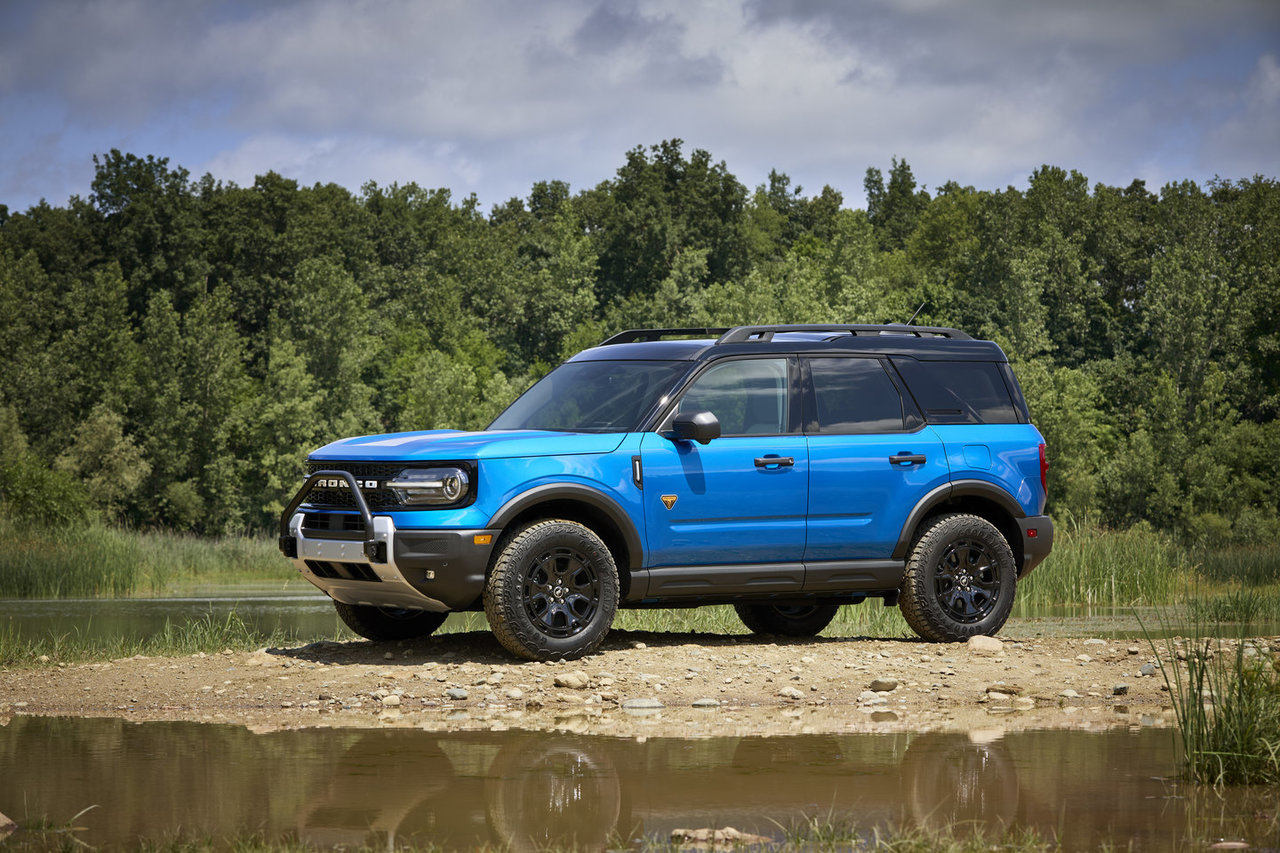
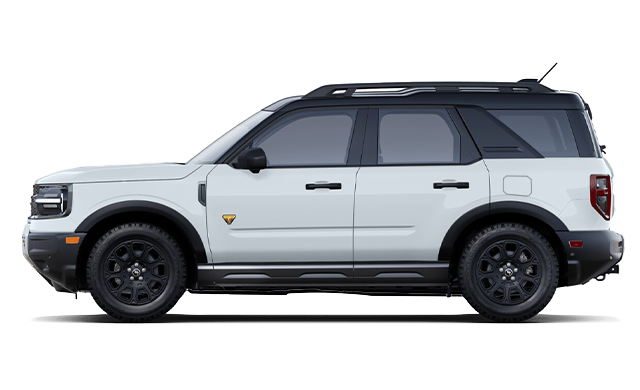
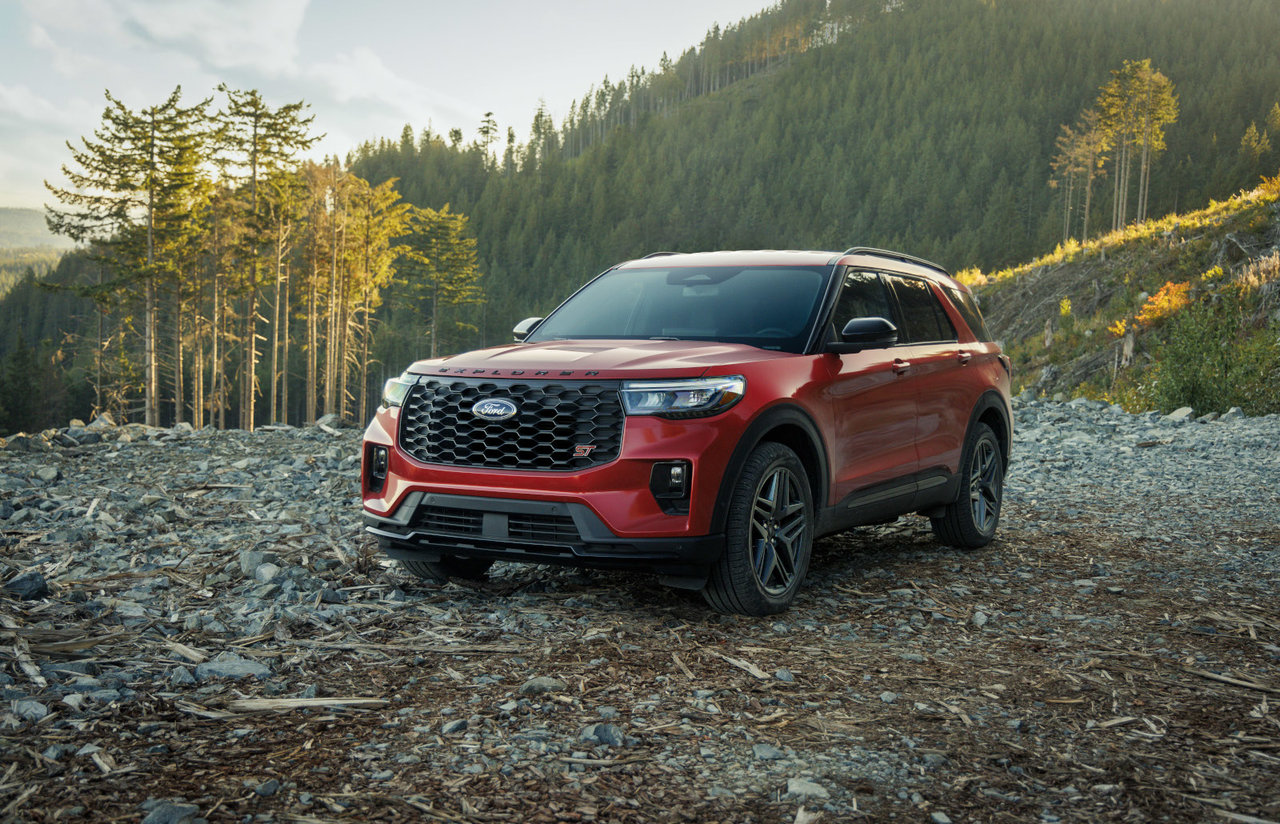
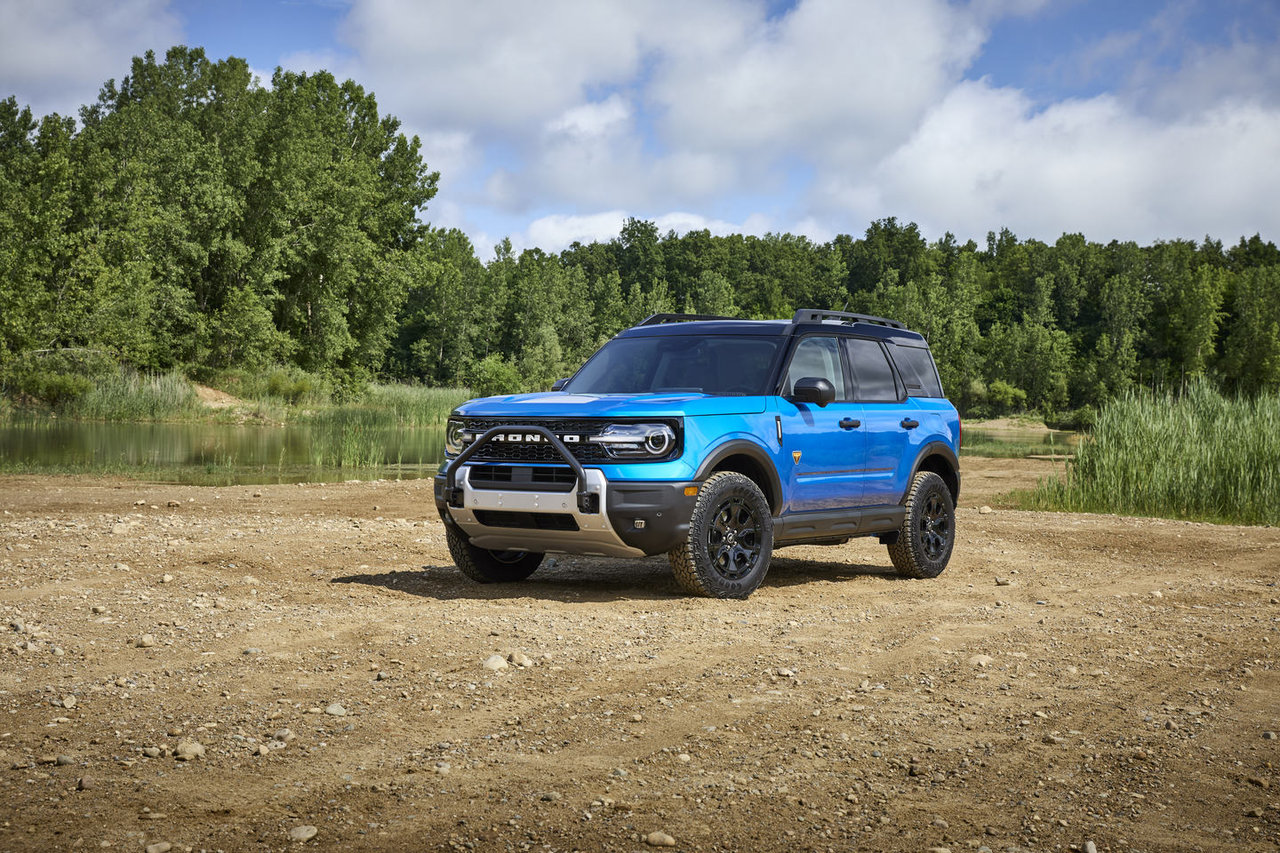
The 2026 Ford Escape answers a question many Ontario drivers face: can one vehicle handle weekday efficiency and weekend adventure without compromise? Against the Ford Bronco Sport's rugged off-road reputation, the Escape makes its case through towing capacity, fuel efficiency, and cabin versatility - three factors that matter more than trail ratings for drivers splitting time between Highway 401 commutes and Muskoka cottage runs.
Both vehicles share Ford's EcoBoost engine architecture and 4WD capability, but they diverge on powertrain strategy. The Bronco Sport commits fully to gasoline power with standard 4x4 and terrain-focused drive modes. The Escape offers hybrid and plug-in hybrid variants alongside traditional turbocharged options, prioritizing efficiency and electric-only range for daily driving.
For Ontario drivers covering 25,000 km annually with mixed urban commuting and weekend trailer towing, the Escape's combination of towing capacity and electric range on the PHEV variant creates measurably lower operating costs.
|
Feature
|
2026 Ford Escape
|
Ford Bronco Sport
|
|
Engine Options
|
1.5L EcoBoost, 2.0L EcoBoost, 2.5L Hybrid, 2.5L PHEV
|
1.5L EcoBoost, 2.0L EcoBoost
|
|
Horsepower Range
|
180-250 hp
|
180-250 hp
|
|
Towing Capacity
|
3,500 lbs (1,587 kg)
|
2,200-2,700 lbs
|
|
Fuel Economy (Highway)
|
6.9 L/100km (Active FWD)
|
7.9 L/100km (combined)
|
|
Electric Range
|
Up to 60 km (PHEV)
|
-
|
The Towing Advantage
The Escape handles 3,500 lbs (1,587 kg) of trailer weight with the 2.0L EcoBoost engine and Class II Trailer Tow Package.
The Escape's independent MacPherson front and multi-link rear suspension balances towing stability with daily-drive comfort - which matters when hauling a boat to Lake Simcoe on Friday evening after a full work week. The higher towing rating also covers snowmobile trailers, utility trailers loaded with building materials, and tandem-axle cargo trailers without requiring constant weight calculations.
Where Electric Range Covers Most Ontario Commutes
The Escape Plug-In Hybrid delivers up to 60 km of electric-only range - enough to cover the 48 km round trip from Mississauga to downtown Toronto, the 52 km Oakville-to-Hamilton commute, or the 38 km Kanata-to-Parliament Hill drive on battery power alone. The Bronco Sport offers no electrified option.
The Escape Active FWD achieves 6.9 L/100km on highway runs - a 1.0 L/100km advantage over the Bronco Sport's 7.9 L/100km that compounds over 20,000 km of annual driving. For drivers with Level 2 home charging access, the Escape PHEV eliminates fuel costs entirely on weekday commutes under 60 km, reserving gasoline range for weekend highway trips. That simplicity costs Bronco Sport drivers additional fuel consumption for typical Ontario commutes.
Cargo Flexibility: 1,851 Litres with Sliding Second-Row Seats
The Escape provides 1,851 litres of cargo volume with seats folded - enough for four hockey bags, a week's worth of camping gear, or a full Costco run with the family still aboard. The sliding second-row seats add fore-aft adjustment, letting drivers prioritize rear legroom or cargo depth without choosing one permanently.
The Escape's power liftgate and lower load floor height simplify loading heavy items - a practical advantage when loading 50-lb bags of softener salt or stacking boxes after an IKEA trip. The sliding rear seats and larger cargo bay handle the full spectrum of weekday-to-weekend hauling without requiring roof racks or cargo carriers for routine use.
SYNC 4 Technology and Daily-Drive Refinement
Both vehicles offer SYNC 4 with wireless Apple CarPlay and Android Auto, but the Escape scales up to a 13.2-inch touchscreen on higher trims. The Escape adds wireless charging, a 4G LTE Wi-Fi hotspot, and an available B&O Sound System.
The Bronco Sport counters with a 12.3-inch digital instrument panel, 360-degree camera with Trail View, and six USB-C inputs. Its technology focus skews toward off-road functionality - trail cameras, pitch/roll displays, and terrain-specific screens.
For Ontario drivers spending 90% of seat time on paved roads, the Escape's cabin refinement and premium audio system deliver more value than specialized off-road displays.
Powertrain Options: Four Choices vs Two
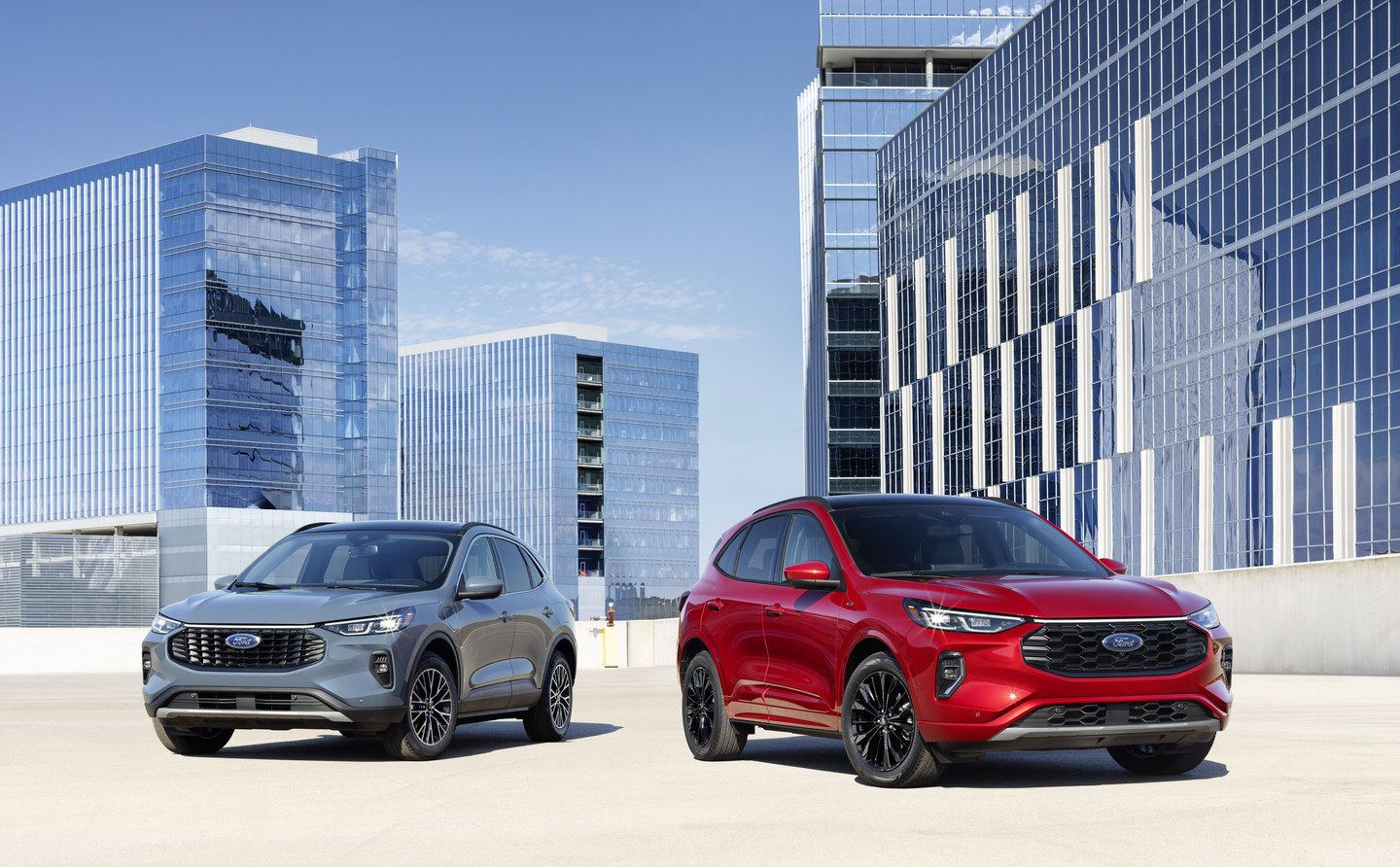
The Escape offers four distinct powertrains: 1.5L EcoBoost (180 hp), 2.0L EcoBoost (250 hp), 2.5L Hybrid (192 hp), and 2.5L Plug-In Hybrid (210 hp). The Bronco Sport limits buyers to two EcoBoost engines - 1.5L (180 hp) or 2.0L (250 hp) - with no hybrid alternative.
The Escape's powertrain flexibility matters most for Ontario drivers who want AWD capability without sacrificing efficiency. The 2.5L Hybrid with AWD delivers 192 hp and strong fuel economy, while the PHEV variant adds electric-only commuting. Escape ST-Line Elite and Platinum trims pair the 2.0L EcoBoost's 250 hp with refined interior appointments, creating a performance-oriented daily driver.
Drive Modes: Eco Efficiency vs Seven-Mode Off-Road Focus
The Bronco Sport deploys seven G.O.A.T. (Goes Over Any Terrain) modes: Normal, Eco, Sport, Slippery, Off-Road, Rock Crawl, and Rally. These modes adjust throttle response, transmission shift points, stability control, and 4WD torque distribution for specific terrain conditions.
The Escape focuses on Eco mode for fuel efficiency, prioritizing on-road driving dynamics. While the Bronco Sport's drive mode array impresses on paper, most Ontario drivers encounter snow, rain, and gravel roads - conditions both vehicles handle with standard AWD and stability control.
For drivers who actually use off-road capability weekly, the Bronco Sport's specialized modes and HOSS 2.0 suspension deliver measurable advantages. For the majority who encounter off-pavement driving twice per season, the Escape's Eco mode and hybrid efficiency provide daily value the Bronco Sport can't match.
Safety Technology: Co-Pilot360 Across Both Lineups
Both vehicles include Ford Co-Pilot360 with Pre-Collision Assist, Automatic Emergency Braking, Lane Keeping System, and Blind Spot Information System (BLIS) with Cross-Traffic Alert. The Bronco Sport adds Evasive Steering Assist and Reverse Brake Assist on higher trims, while the Escape includes SOS Post-Crash Alert System and Safety Canopy side-curtain airbags.
Safety parity between these vehicles means the decision hinges on other factors. Neither vehicle compromises occupant protection, and both meet Transport Canada's latest crash test standards.
The Verdict: Towing, Efficiency, and Versatility for Ontario's Two-Life Drivers
The 2026 Ford Escape wins for Ontario drivers who split their time between weekday commutes and weekend adventures because it delivers 3,500 lbs of towing capacity, electric range on PHEV variants, and 1,851 litres of cargo volume - three specs that directly reduce operating costs and expand capability for the majority of real-world use cases.
For the driver towing a travel trailer to Algonquin Park on summer weekends while commuting 50 km daily to a Mississauga office, the Escape PHEV eliminates weekday fuel costs and handles weekend towing with the properly equipped 2.0L EcoBoost variant. The Bronco Sport forces that same driver to burn gasoline from kilometre one.
The Bronco Sport remains the correct choice for buyers who prioritize off-road credibility, frequently drive unmaintained trails, or value rugged styling over efficiency. But for Ontario families balancing cottage weekends, boat launches, and daily commutes without sacrificing cargo space or fuel economy, the Escape's combination of towing capacity, hybrid efficiency, and cabin versatility delivers more usable capability where it actually counts - on the 48 weekday drives between each weekend adventure.
Visit Reliable Ford to explore how the 2026 Escape's powertrain options and towing capacity align with your specific Ontario driving patterns - and explore which configuration matches your weekday-weekend split.