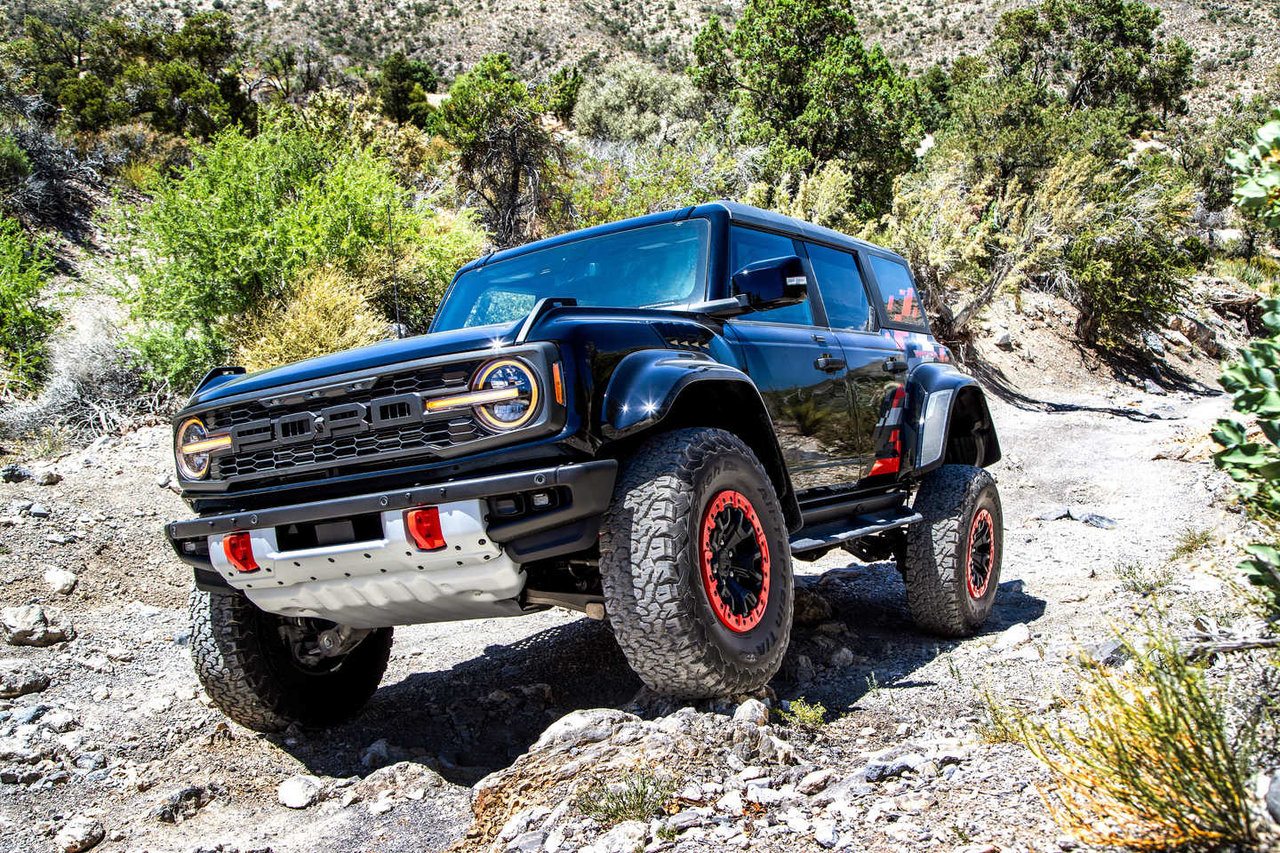
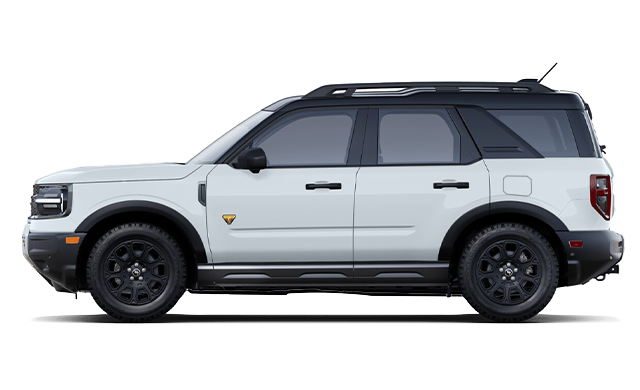
They share a name, a badge, and a reputation for handling terrain that most vehicles won't touch. But the 2026 Ford Bronco and the 2026 Ford Bronco Sport are built around very different ideas of what off-road capability looks like in daily life. One is a body-on-frame, removable-roof, rock-crawling truck-based SUV with up to 333 mm (13.1 in) of ground clearance and a 7-speed manual transmission option. The other is a compact car-based SUV that handles gravel roads, ski hill parking lots, and light trail work without asking much of the driver. Both are capable. Both are legitimate. The question is what kind of adventurer you are.
At Reliable Ford in Fergus, we get this question regularly — and the honest answer depends less on which truck looks better on the spec sheet and more on how you actually spend your weekends. Here's a direct look at how the two compare.
At a Glance: Bronco vs. Bronco Sport
|
Feature
|
Ford Bronco
|
Ford Bronco Sport
|
|
Platform
|
Body-on-frame (truck-based)
|
Unibody (car-based)
|
|
Engines
|
2.3L EcoBoost I-4 (300 hp) or 2.7L EcoBoost V6 (330 hp)
|
1.5L EcoBoost I-3 (180 hp) or 2.0L EcoBoost I-4 (250 hp)
|
|
Max Towing
|
2,041 kg (4,500 lbs)
|
1,225 kg (2,700 lbs)
|
|
Ground Clearance
|
Up to 333 mm (13.1 in) with Sasquatch Package
|
Standard configuration
|
|
Water Fording
|
Up to 851 mm (33.5 in)
|
Limited
|
|
G.O.A.T. Modes
|
Up to 7
|
Up to 7 (Badlands) / 5 (other trims)
|
|
Removable Doors & Roof
|
Yes
|
No
|
|
Body Styles
|
2-door, 4-door
|
One (5-door)
|
|
4x4 Standard
|
Yes
|
Yes
|
Engines and Driving Character
The Bronco and Bronco Sport both run EcoBoost engines, but the power gap between them is meaningful.
The Bronco's base 2.3L EcoBoost I-4 produces 300 hp and 440 N·m (325 lb-ft) of torque. The available 2.7L EcoBoost V6 steps that up to 330 hp and 563 N·m (415 lb-ft). Both pair with a 10-speed automatic, and the 2.3L also comes with an available 7-speed manual — the only manual transmission in a Ford SUV today. On the Bronco Raptor, the 3.0L EcoBoost V6 produces 418 hp, purpose-built for high-speed off-road running.
The Bronco Sport's 1.5L EcoBoost I-3 delivers 180 hp and 271 N·m (200 lb-ft) — enough for daily driving, moderate trails, and light hauling. The Badlands model gets the 2.0L EcoBoost I-4 with 250 hp and 380 N·m (280 lb-ft) of torque, and adds Advanced 4x4 with a Twin-Clutch Rear Drive Unit that can direct virtually all rear axle torque to a single rear wheel. That's a legitimate capability upgrade over the standard 4x4 setup.
For drivers who want more power or who plan to run the truck on more demanding terrain, the Bronco's output range is the stronger choice. For commuters and weekend explorers, the Bronco Sport's smaller engines keep fuel costs manageable and the driving experience relaxed.
Off-Road Capability: Where the Gap is Largest
This is where the Bronco and Bronco Sport part ways most clearly.
The Bronco is built on a high-strength steel body-on-frame chassis — the same type of platform used in purpose-built off-road trucks. It runs 4x4 as standard across every trim, with features like the HOSS Suspension System, a Stabilizer Bar Disconnect, and selectable drive modes covering Mud/Ruts, Sand, Rock Crawl, Baja, and more. Ground clearance reaches 333 mm (13.1 in) with the Sasquatch Package, which also brings 35-inch tires, high-clearance fender flares, and a Dana front axle. Water fording depth is up to 851 mm (33.5 in). The Everglades trim takes fording even further. Approach angle tops out at 47.2°. The doors and roof come off completely, and the interior uses marine-grade vinyl with floor drains — details that only matter if you're going places that get genuinely dirty.
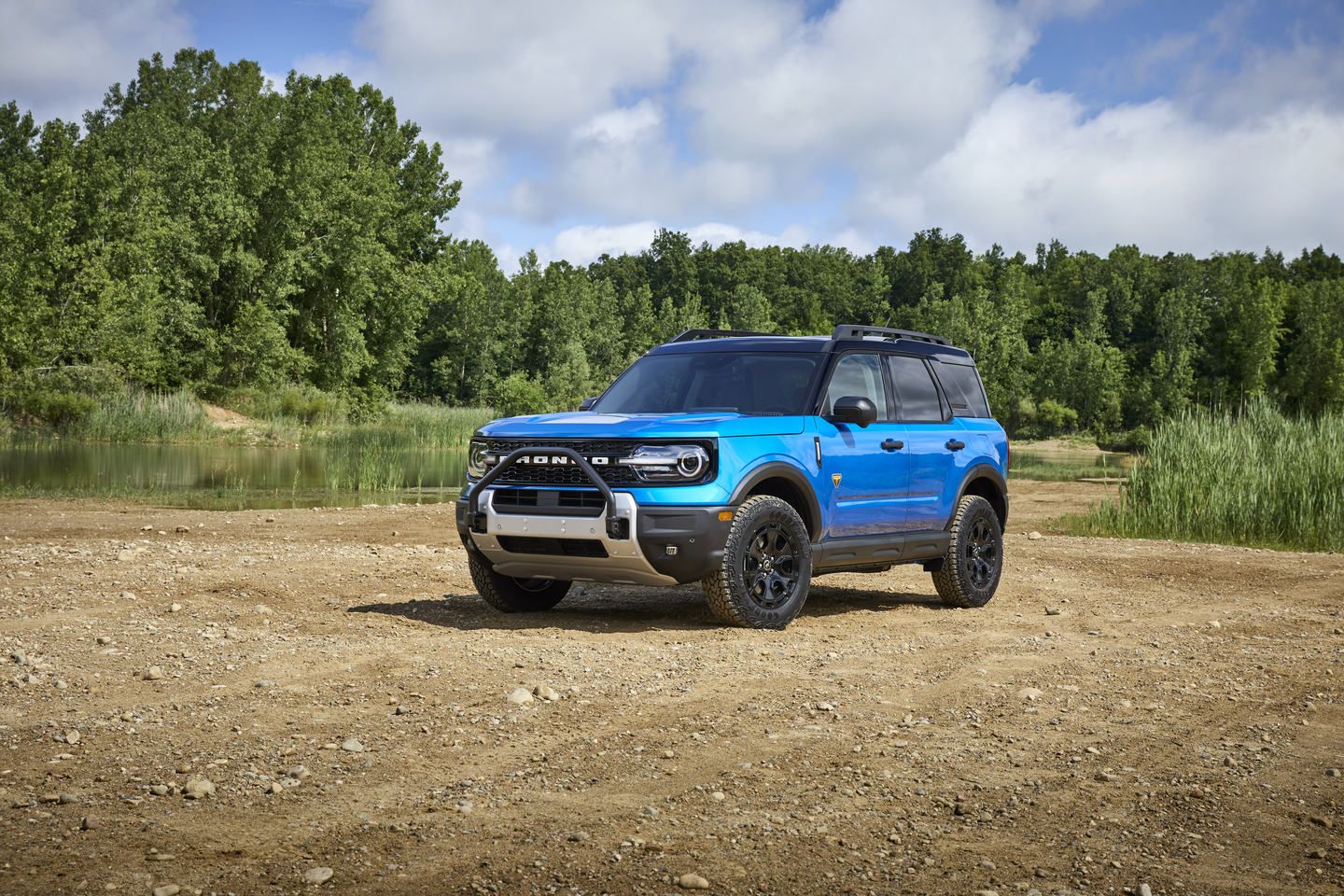
The Bronco Sport is capable in a different way. On the Badlands trim, it delivers rock crawl mode, an Advanced 4x4 system with twin-clutch rear torque vectoring, steel underbody protection, and a steel-plated front bumper. The available Sasquatch Badlands Package adds Bilstein rear shocks and additional upgrades. For gravel roads, snowy Ontario highways between Fergus and Mount Forest, and packed trail surfaces, the Bronco Sport handles that without trouble. It won't ford a river or drop into a rock garden, but it doesn't need to for most Ontario drivers.
Bronco off-road highlights:
- Ground clearance up to 333 mm (13.1 in) with Sasquatch Package
- Water fording up to 851 mm (33.5 in)
- Available 7-speed manual transmission
- Body-on-frame construction; removable doors and roof
Bronco Sport off-road highlights:
- Advanced 4x4 with Twin-Clutch Rear Drive Unit on Badlands
- Up to 7 G.O.A.T. Modes on Badlands trim
- Steel underbody protection and front bumper (Badlands)
- Standard 4x4 across all trims
Towing and Practicality
Both vehicles tow, but the Bronco carries a meaningful advantage.
The Bronco's max towing sits at 2,041 kg (4,500 lbs) on select configurations — sufficient for a small boat, a pair of ATVs, or a loaded utility trailer. The Bronco Sport reaches 1,225 kg (2,700 lbs) on the Badlands model and 998 kg (2,200 lbs) on Big Bend and Outer Banks — useful for lighter trailers and personal watercraft.
On interior space and everyday usability, the Bronco Sport holds its own. It's compact enough for tight parking, and the cargo area handles grocery runs, ski gear, and dog crates without drama. The Bronco's interior is purpose-built for off-road use with easy-clean surfaces and open-air flexibility — features that matter most when the vehicle is actually being used the way it was designed to be used.
Which One Is Right for You?
The Bronco is the choice for drivers in Ontario who want serious off-road performance — not as an occasional feature, but as the truck's core purpose. If weekend plans regularly involve trails with real obstacles, deep water crossings, or the kind of terrain where standard ground clearance isn't enough, the Bronco is built for that. Its trim lineup runs from the approachable Big Bend all the way to the Raptor, giving buyers a wide range to match the level of capability they actually want.
The Bronco Sport fits a different kind of buyer: someone who wants the off-road image and the genuine capability to handle mixed-surface Ontario driving — rural roads, logging paths, conservation area trails, or a snow-heavy Wellington County winter — without the size, fuel cost, or complexity of the full Bronco. It's also the more practical daily driver for someone who spends more time on the 400-series highways than on a rock crawl course.
Both are strong vehicles. The gap comes down to how far off the pavement you're actually going.
Explore Both at Reliable Ford in Fergus
If you're still deciding between the two, the best next step is to see them side-by-side. The team at Reliable Ford in Fergus can walk you through the trim options for both models and help you match the right build to your driving habits. Book a test drive or visit us in Fergus to get a closer look.