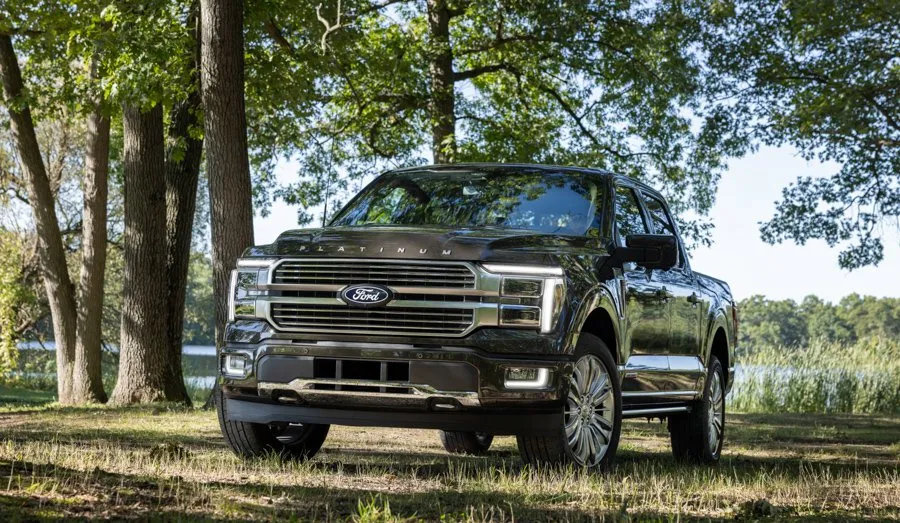
Summer road trips put a truck’s engine choice under real pressure: hours of highway cruising, a full cab, maybe a trailer behind it. The 2026 Ford F-150 offers a wide spread of V6 and V8 engines, and each one changes how a long Ontario drive feels behind the wheel. Here is how the lineup breaks down for highway comfort, fuel type, and range.
2026 F-150 Engine Options at a Glance
The table below lines up every engine’s fuel type, output, and fuel economy so the trade-offs are visible at once.
|
Engine
|
Fuel Type
|
Horsepower
|
Torque
|
Highway (L/100 km)
|
Combined (L/100 km)
|
|
3.5L PowerBoost Full Hybrid V6
|
Regular unleaded
|
420 hp
|
570 lb-ft
|
10.1
|
10.1
|
|
2.7L EcoBoost V6
|
Regular unleaded
|
325 hp
|
400 lb-ft
|
9.2
|
10.7
|
|
3.5L EcoBoost V6
|
Regular unleaded
|
400 hp
|
500 lb-ft
|
10.2
|
12.0
|
|
5.0L Ti-VCT V8
|
Regular unleaded or E85
|
400 hp
|
410 lb-ft
|
10.2
|
12.4
|
|
3.5L EcoBoost V6 (Tremor)
|
Regular unleaded
|
400 hp
|
500 lb-ft
|
11.6
|
13.3
|
|
High-Output 3.5L EcoBoost V6 (Raptor)
|
Premium unleaded
|
450 hp
|
510 lb-ft
|
14.8
|
15.8
|
|
High-Output Supercharged 5.2L V8
|
Premium unleaded
|
720 hp
|
640 lb-ft
|
15.9
|
19.7
|
Fuel Economy and Highway Cruising
The 3.5L PowerBoost Full Hybrid V6 leads the 2026 F-150 lineup on fuel economy, rated at 10.1 L/100 km combined, with highway and city numbers landing at that same 10.1 figure. That flat curve matters on a long drive: economy does not fall off once you settle into a steady highway speed.
The 2.7L EcoBoost V6 sits close behind at 10.7 L/100 km combined and 9.2 L/100 km on the highway, the strongest pure-highway number in the lineup. It suits drivers who want V6 economy without the hybrid’s added componentry, running on regular unleaded like most of the range.
Every engine in the 2026 F-150, from the hybrid to the Raptor’s High-Output EcoBoost, pairs with the same electronic 10-speed automatic transmission. That gearbox is also standard across every trim: XL, STX, XLT, Lariat, King Ranch, Platinum, Tremor, and Raptor. On the highway, the extra ratios keep the engine turning at lower rpm at cruising speed, part of why even the heavier V8 and Tremor variants hold reasonable highway numbers despite the added weight.
V6 and V8 Tradeoffs for the Road
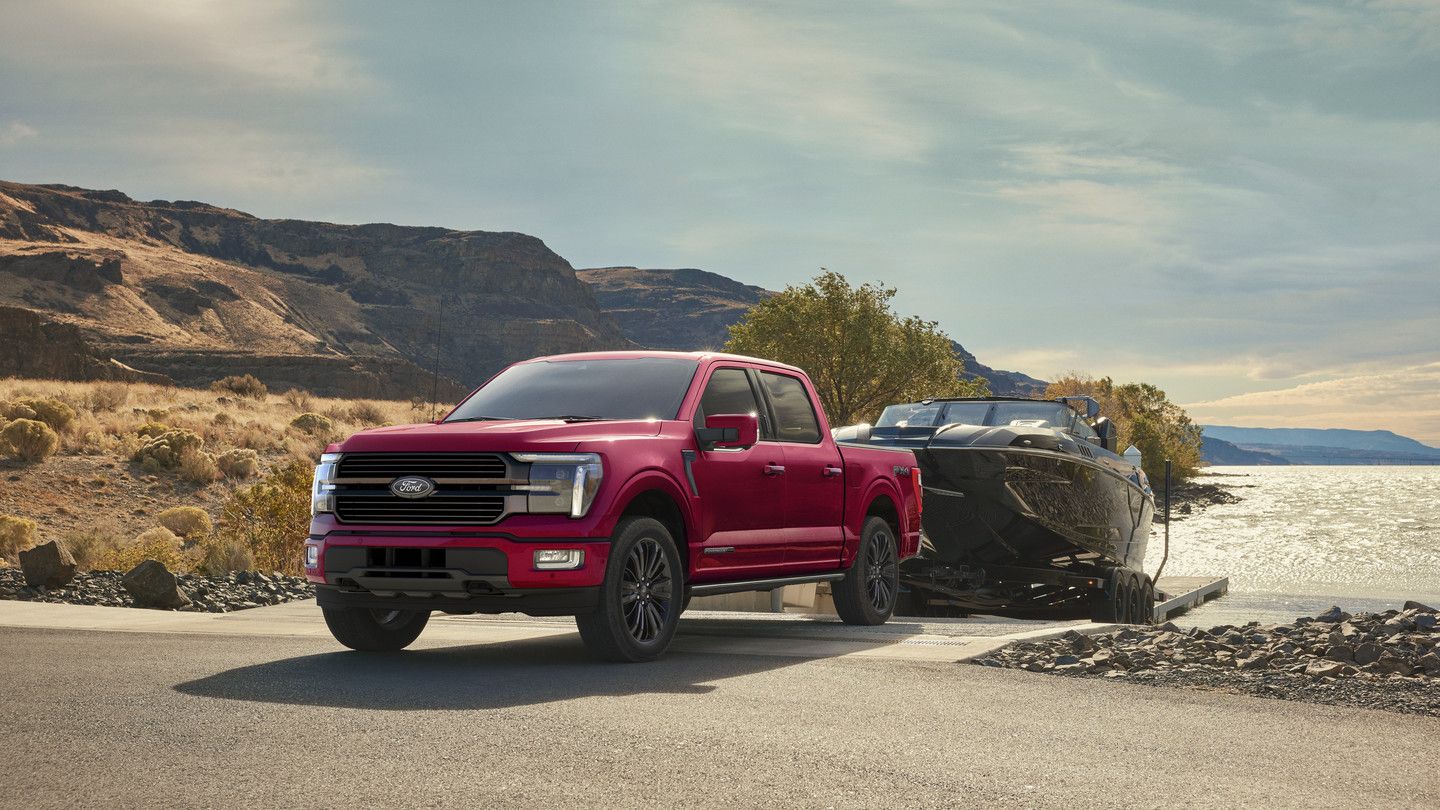
Stepping up from the base EcoBoost brings a torque and towing choice, not just a power boost. The 3.5L EcoBoost V6 makes 400 hp and 500 lb-ft of torque, rated at 12.0 L/100 km combined and 10.2 L/100 km on the highway. Ontario drivers hauling a trailer get up to 13,500 lbs (6,124 kg) of towing from this engine.
The 5.0L Ti-VCT V8 makes the same 400 hp but only 410 lb-ft of torque, and its towing tops out at 12,800 lbs (5,806 kg), about 700 lbs (318 kg) less than the EcoBoost V6. It also runs slightly thirstier, at 12.4 L/100 km combined. The V8 can burn E85 flex fuel; the EcoBoost cannot.
That flexibility, and the sound of a V8, is the real reason to pick it over the more capable, more efficient V6.
Tremor and Raptor: Capability Over Economy
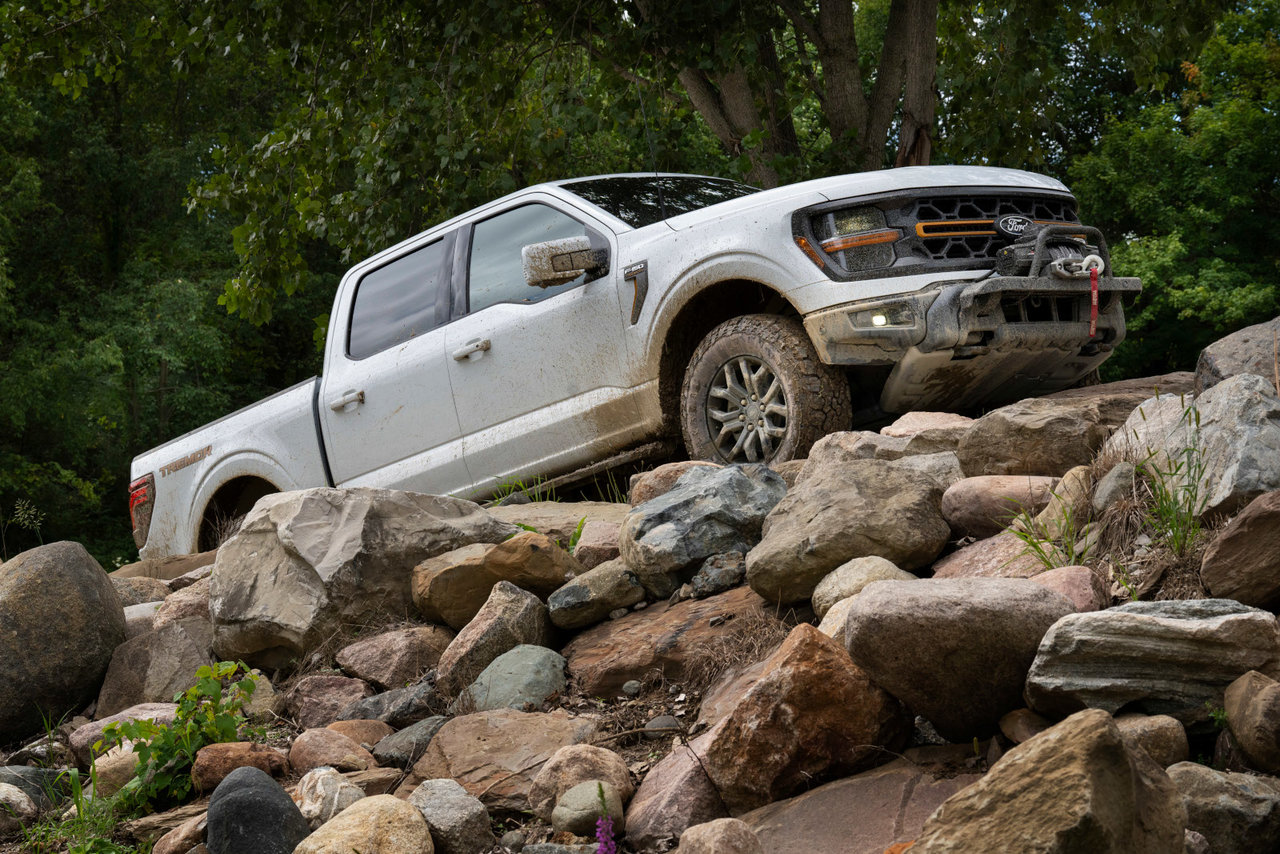
The Tremor and Raptor exist for a different job than the rest of the lineup. The Tremor uses the same 3.5L EcoBoost V6 as the standard truck, tuned with an off-road suspension, steel skid plates, and selectable drive modes for multiple terrains. That extra hardware, plus the added ride height, pushes its rating to 13.3 L/100 km combined and 11.6 L/100 km on the highway, noticeably higher than the standard 3.5L EcoBoost’s 12.0 and 10.2.
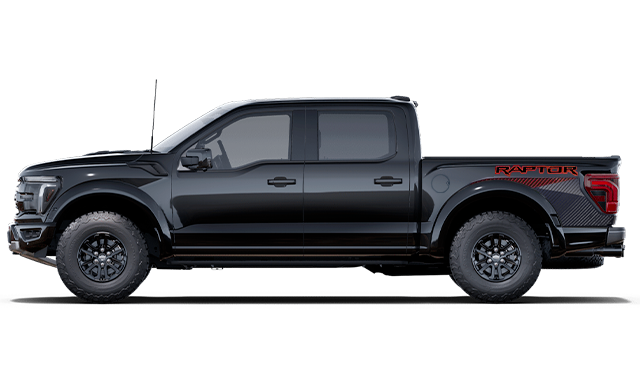
The Raptor moves further still, built around a High-Output 3.5L EcoBoost V6 making 450 hp and 510 lb-ft of torque, rated at 15.8 L/100 km combined. It also offers a supercharged 5.2L V8 option with 720 hp and 640 lb-ft of torque, climbing to 19.7 L/100 km combined, the highest fuel use anywhere in the 2026 F-150 range.
Both High-Output engines call for premium unleaded, not the regular fuel the rest of the lineup runs on. For a summer trip built around towing or covering highway distance, neither is the efficient choice; both are tuned for a different kind of driving.
Packing for the Long Weekend
A road trip is also about what fits inside the truck. The F-150’s cabin offers 1,115 mm of legroom, 1,037 mm of headroom, and 1,695 mm of shoulder room, enough for adults to sit comfortably over a multi-hour drive. Lockable interior storage keeps valuables out of sight, and rear seats that flip up free floor space for coolers or camping gear.
The standard 5.5-foot cargo box measures 1,705 mm long and 1,287 mm wide between the wheelhouses, with 1,494.8 L of volume, room for luggage, bikes, or a cooler that will not fit in the cab. Fuel tanks range from 87 L up to 136 L depending on configuration. On the base 87 L tank, the 3.5L EcoBoost’s 12.0 L/100 km combined rating works out to roughly 725 km between fill-ups, enough for most one-day trips without stopping.
Cabin and cargo at a glance: - Legroom: 1,115 mm - Headroom: 1,037 mm - Shoulder room: 1,695 mm - 5.5-foot cargo box volume: 1,494.8 L
Which 2026 F-150 Engine Fits Your Ontario Summer Drive
Drivers whose summer includes long highway stretches and want to spend less time at the pump should look at the 3.5L PowerBoost Full Hybrid V6 or the 2.7L EcoBoost V6, the two most efficient engines in the lineup. Both run on regular fuel and hold their economy numbers steady at highway speed.
Drivers towing a trailer, boat, or camper get the strongest case for the 3.5L EcoBoost V6: more towing capacity than the 5.0L V8, plus better fuel economy. The V8 remains worth a look mainly for its E85 flex-fuel option or its engine character.
Drivers heading off-pavement for the long weekend, not just down a paved cottage road, are the audience for the Tremor and Raptor. Both trade highway efficiency for suspension travel and ground clearance, and the Raptor adds an available supercharged V8 on top. The tradeoff is real: expect premium fuel and a noticeably higher number at the pump.
Finding the Right F-150 Engine for the Road Ahead
The 2026 F-150’s engine lineup spans a fuel-sipping hybrid V6 to a 720-hp supercharged V8, each suited to a different kind of driving, from steady highway cruising to full off-road capability.
Visit Reliable Ford in Fergus, Ontario, to compare the F-150’s engine options in person and find the setup that matches your summer driving plans.